
Children Feet Issues
In-toeing, out-toeing, growing pains, frequent tripping. Most resolve naturally — some don't. Knowing the difference matters.
Most resolve. Some need help
A child's feet change a lot between ages 4 and 12. The arch develops. Walking patterns settle. Most quirks parents worry about — in-toeing, out-toeing, the occasional trip — resolve naturally as the foot finishes forming.
But some don't. Persistent pain, frequent tripping into late childhood, refusing to walk, complaining of tired legs after short distances — these signal that the foot needs help. A 20 to 30 minute assessment is usually enough to tell which group your child is in. No pressure to buy if support isn't needed.
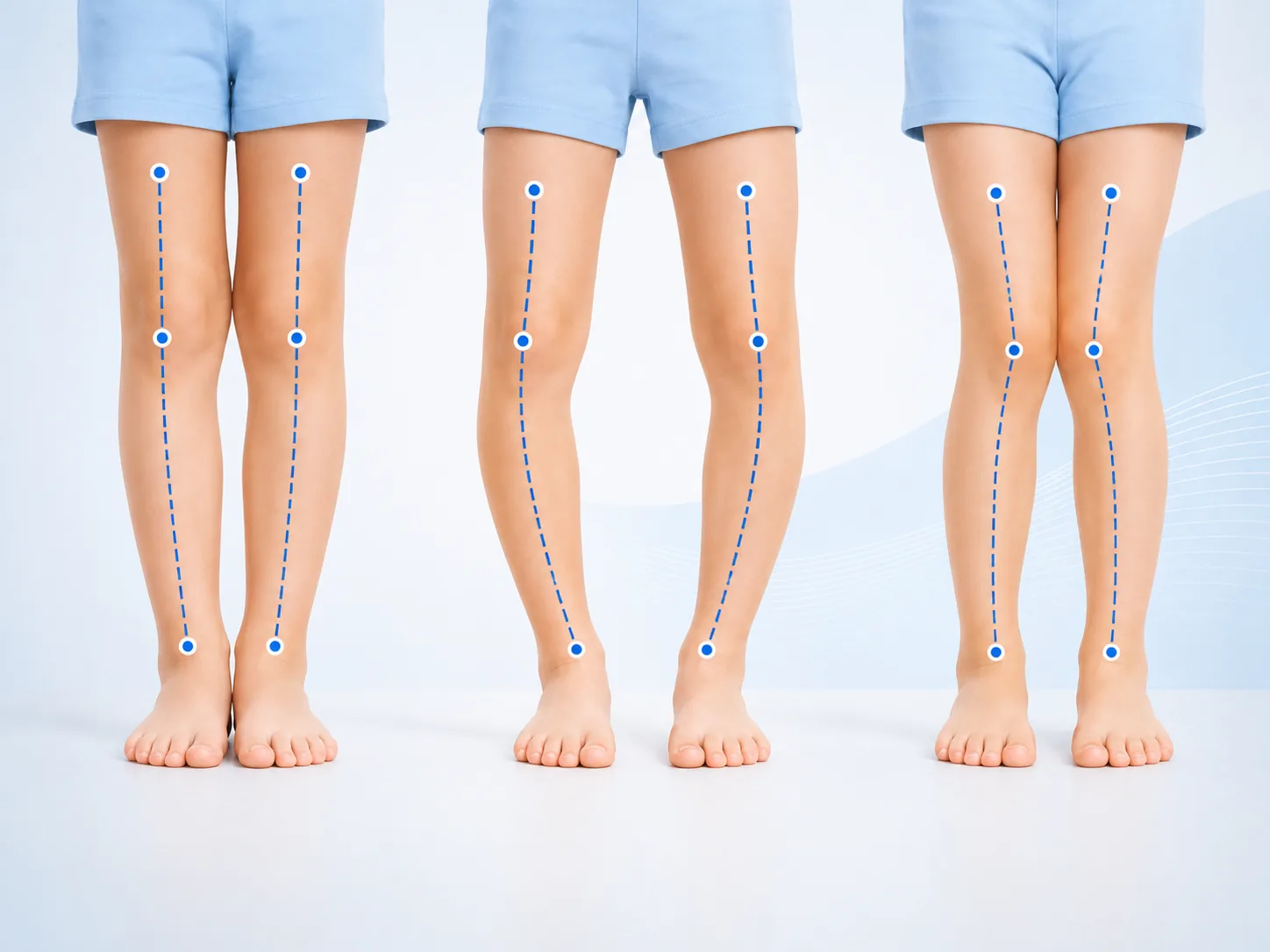
Common kid foot concerns by age
Some things resolve naturally with growth. Some need a closer look. Here is how to tell which is which.
What is common at this age
- Feet pointing inward (in-toeing / pigeon-toed) when walking — common up to age 8.
- Feet pointing outward (out-toeing / duck walk) — also common, usually resolves by 8.
- Tripping more often than other kids the same age.
- Preference for W-sitting on the floor (a signal, not a diagnosis).
- Apparent flat feet — most children have low arches until around age 5.
- Occasional complaints of leg or foot ache after a busy day.
What is normal vs not
Many of these patterns resolve naturally as bones, muscles, and walking habits mature. The signals to take seriously: pain, persistent limping, or refusal to walk.
A walking observation tells us more than any single sign. If the pattern improves over a few months, watch and wait. If it worsens or causes pain, assess.
How we approach it at this age
Assessment is gentle and play-based. We watch them walk, scan their feet, check shoe wear, and talk to parents about what they notice at home.
If support is needed, custom insoles are designed for a growing foot with replacement scheduled as they grow.
More about our kids programmeWhat to look for as they grow
- Persistent in-toeing or out-toeing that did not resolve by age 8.
- Heel pain during or after sport (often Sever's disease, common 8-14).
- Visible bump just below the kneecap, tender to press (Osgood-Schlatter).
- Knee pain that comes on during running or jumping.
- Frequent ankle sprains or unsteady ankles.
- Persistent fatigue or pain after school sport.
Why the 8-to-12 window matters
This is the window where mechanical issues that did not resolve naturally usually need support. Growth spurts also bring new aches — many resolve, some need attention.
Active kids who play organised sport are more likely to develop pain conditions. Catching them early prevents months of unnecessary discomfort.
How we approach this age group
Same 20-30 minute assessment, with extra focus on sport demands, growth plates, and shoe wear.
Custom insoles designed around their activity level. We coordinate with school sport schedules so support timing matches what their body is doing.
See how an assessment worksThree common kid foot concerns
-
In-toeing & out-toeing
Feet pointing inward (pigeon-toed) or outward (duck walk). AAOS notes most in-toeing in children under 8 corrects itself without treatment. Persistent cases with tripping or pain need a closer look.
-
Growing pains
Aching legs at night after active days. Most are normal. Pain that lingers into the next day, or wakes the child, is worth checking.
-
Frequent tripping
Active kids who trip often, refuse to walk, or get tired quickly — these are signals the foot mechanics are working against them, not for them.
What parents ask us most
Will my child grow out of in-toeing or out-toeing?
Most do, especially mild cases. The American Academy of Orthopaedic Surgeons notes that the vast majority of children younger than 8 see in-toeing correct itself without treatment — metatarsus adductus usually within the first 4 to 6 months of life, tibial torsion before school age, and femoral anteversion through childhood. Out-toeing in young children typically resolves on its own too. If it persists, comes with pain, or affects how your child plays, an assessment helps separate "wait and watch" from "support now".
Are growing pains real?
Yes, but the name is misleading — they are not caused by growth itself. They are usually muscle fatigue from active days. Pain that fades with morning is typical. Persistent pain, swelling, or pain that wakes the child means see a doctor.
What is the 4 to 12 golden window?
Between 4 and 12, a child's arch is still developing and walking patterns are still forming. Support during this window has the biggest long-term impact because the foot is shaping in real time. After 12 the foot is mostly set.
Keep exploring
-
Flat Foot
The most common foot finding in young kids. Often pairs with in-toeing or tripping.
See flat foot -
ill-Fitting Shoes
Kids grow out of shoes fast. Wrong-size shoes mimic and worsen foot issues.
See shoe fit -
Kids hub
4–12 golden window, parent checklist, and what to expect from us.
Go to Kids hub
Book a foot assessment for your child
20 to 30 minutes. In-store at Kepong or Johor Bahru. WhatsApp to book.