
Leg Length Discrepancy
One leg slightly shorter than the other. Common, often invisible, and a hidden driver of long-term hip, knee, and back pain.
Small difference, big chain effect
Leg length discrepancy means one leg is measurably shorter than the other. It can be structural (the bone is shorter) or functional (the leg is the same length but pelvis tilt makes it act shorter). Either way, the body compensates to keep the eyes level — and that compensation runs all the way up the spine.
For people with a clinically significant difference — generally above 2 cm per AAOS guidance — daily compensation means uneven shoe wear, one-sided knee or hip pain, recurring lower back ache, and tired legs at the end of the day. Differences smaller than this often cause no symptoms at all. A correctly measured heel lift built into a custom insole solves significant cases quietly, without bulky external shoe modification.
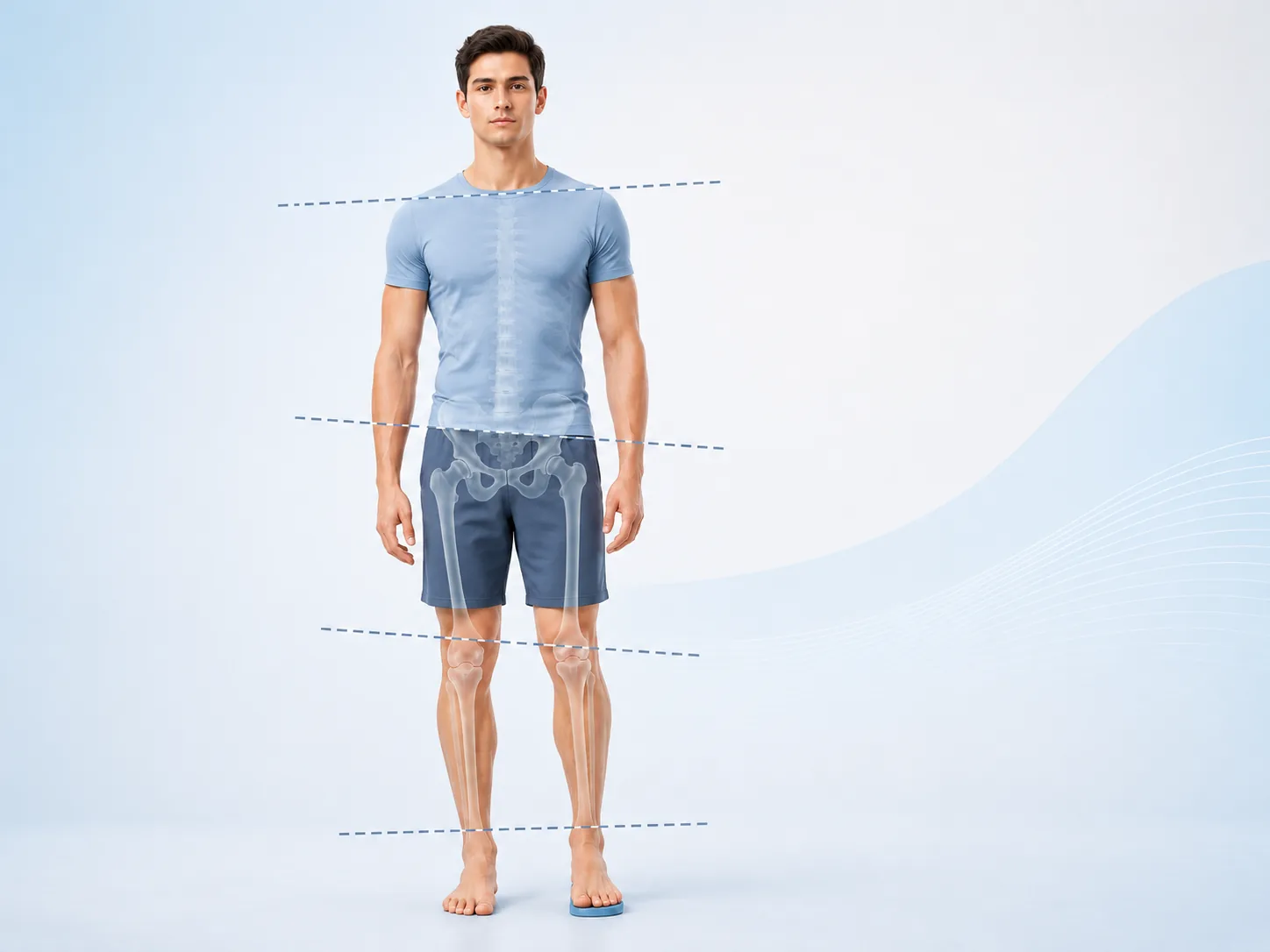
Leg-length differences in kids vs adults
A leg-length gap can be structural or functional. The way to spot it — and what to do about it — depends on age.
What to look for in children
- Visible difference in shoulder or hip height when standing barefoot.
- One trouser leg consistently dragging more than the other.
- Limping during long walks or sport, especially when tired.
- Tilted head or curved standing posture (compensating for the difference).
- Persistent one-sided knee, hip, or back complaints with no injury.
- Foot of the shorter leg often turns out slightly to compensate.
Why it matters during growth
Most kid leg-length differences are under 2 cm and resolve as growth equalises. Anything above 2 cm, or any difference causing pain or visible posture issues, is worth assessing.
Catching a real structural difference early lets us support posture before compensations become habit and the spine starts to curve.
How we approach it for kids
Assessment includes a barefoot stance check, pelvic-level measurement, and gait observation. If the difference is real and meaningful, we design a custom insole with a heel raise on the shorter side.
For larger or progressive differences, we refer to a paediatric orthopedic specialist for medical evaluation.
More about our kids programmeWhat to check in adults
- One-sided low back pain that does not respond to typical stretches or exercise.
- Hip pain or knee pain consistently on one side.
- Shoes wear out faster or differently on one foot.
- Belt or skirt sitting unevenly at the waist; one shoulder always lower.
- History of hip replacement, fracture, or surgery that changed leg length.
- Recurring sciatic-type pain that medical scans do not explain.
Why it matters in adults
Adult leg-length differences are often missed because the body adapts. But over years, the compensations strain the lower back, hip, and knee. Even a 1 cm difference can become symptomatic with long-distance running or long standing hours.
A heel raise inside an insole evens the load without surgery and without visible shoe modifications.
How we approach it for adults
Measurement happens during the assessment with you standing barefoot. We confirm whether the difference is structural (bone) or functional (pelvic tilt) before recommending a heel raise.
For differences above 2 cm or with significant pain, we coordinate with your doctor or physiotherapist.
See how an assessment worksWhat custom insoles do for leg length issues
-
Common, often subtle
More than half of people have a small leg-length difference. Most are under 2 cm and cause no problems. Larger differences can tilt the pelvis and stress the knee, hip, or back over time.
-
Spotted in assessment
During gait observation we look for tell-tale signs: uneven shoulder height, hip drop on one side, one shoe wearing faster than the other.
-
Heel lift inside the shoe
A correctly measured heel lift built into a custom insole levels the pelvis without visible build-up. Daily wear, no special shoes needed.
What people ask about leg length
How do I know if I have leg length discrepancy?
Common signs: one hip sits higher when you stand straight, one shoe wears faster, recurring one-sided back or knee pain, or a doctor noticed it on X-ray. A proper measurement during assessment confirms it.
Is it always a problem?
No. The American Academy of Orthopaedic Surgeons notes that more than 50% of people have a subtle leg-length difference and these mild variations usually do not cause problems. A difference greater than 2 cm is where symptoms more often appear — the body compensates by tilting and twisting, which over years can cause hip, knee, or lower back issues. Catching a significant one early prevents that chain.
Can my child have it?
Yes, sometimes from growth spurts or after a leg injury. Most childhood discrepancies resolve as kids grow, but persistent ones benefit from a heel-lift insole to keep the pelvis level during development.
Keep exploring
-
Children Feet Issues
Uneven gait in kids often hides leg-length issues. Worth checking early.
See children issues -
Knee Pain — deep dive
A leg-length gap often shows up as one-sided knee pain first. See the full foot-knee guide.
See knee pain guide -
Book an assessment
We measure leg length, pelvis tilt, and shoe wear pattern as part of the standard assessment.
See services
Book an assessment to check leg length
20 to 30 minutes. In-store at Kepong or Johor Bahru. WhatsApp to book.