
ill-Fitting Shoes
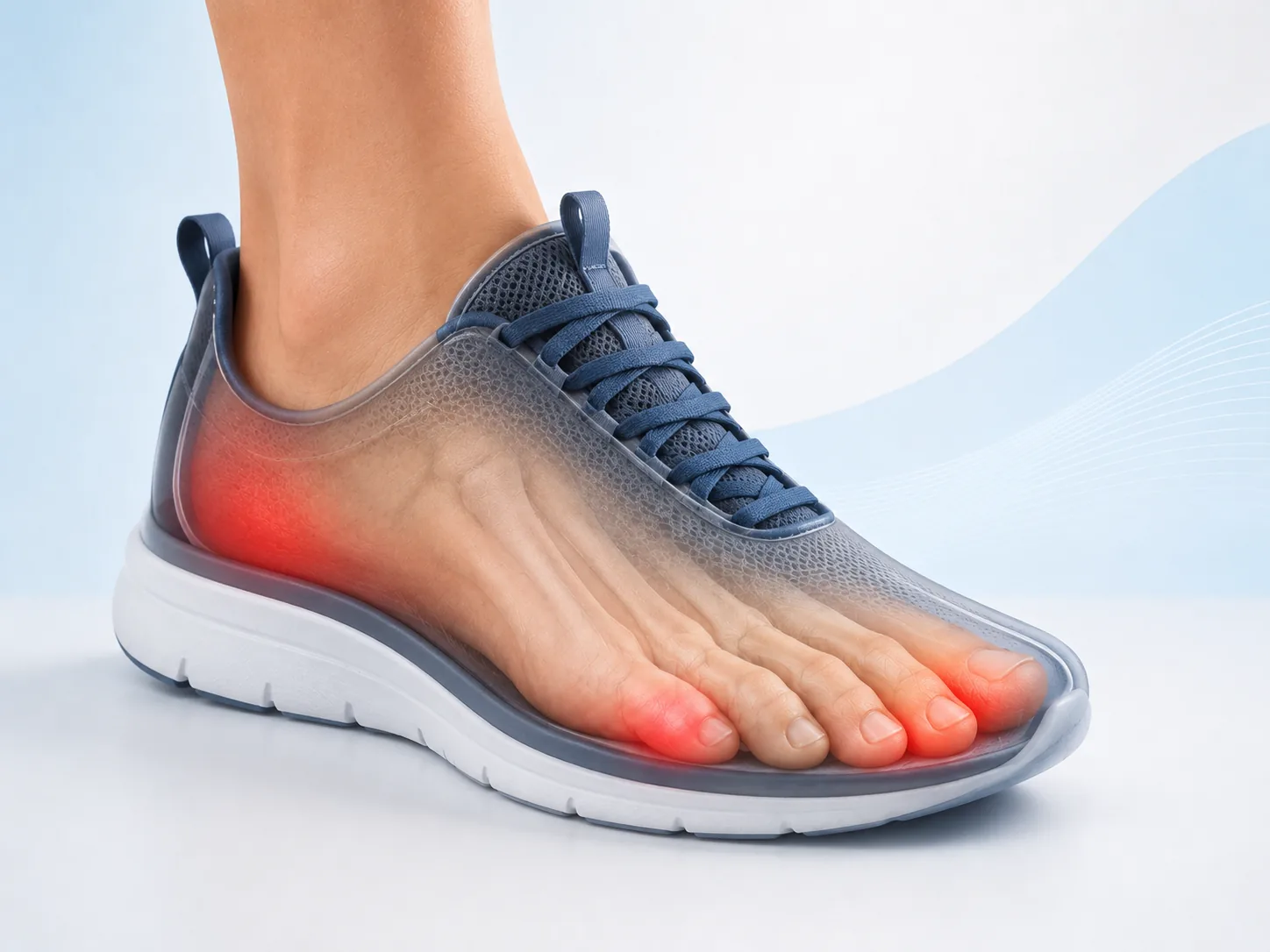
New shoes that already hurt. Uneven heel wear. Toes pinching. Shoes that fit the marketing photo don't always fit your foot.
Most "foot problems" are shoe problems first
Shoes are sized by length, but feet vary in width, arch height, instep, and toe shape. A shoe that fits the length but not the shape forces the foot to compensate — and that compensation shows up as pain, blisters, uneven wear, and over time, structural changes like bunions and hammer toes.
A custom 3D-scanned insole fills the gap between a generic shoe and your specific foot. The insole supports where your arch actually is, cushions where you actually load, and gives toes the room they need. You get to keep wearing the shoes you already own. The insole does the work.
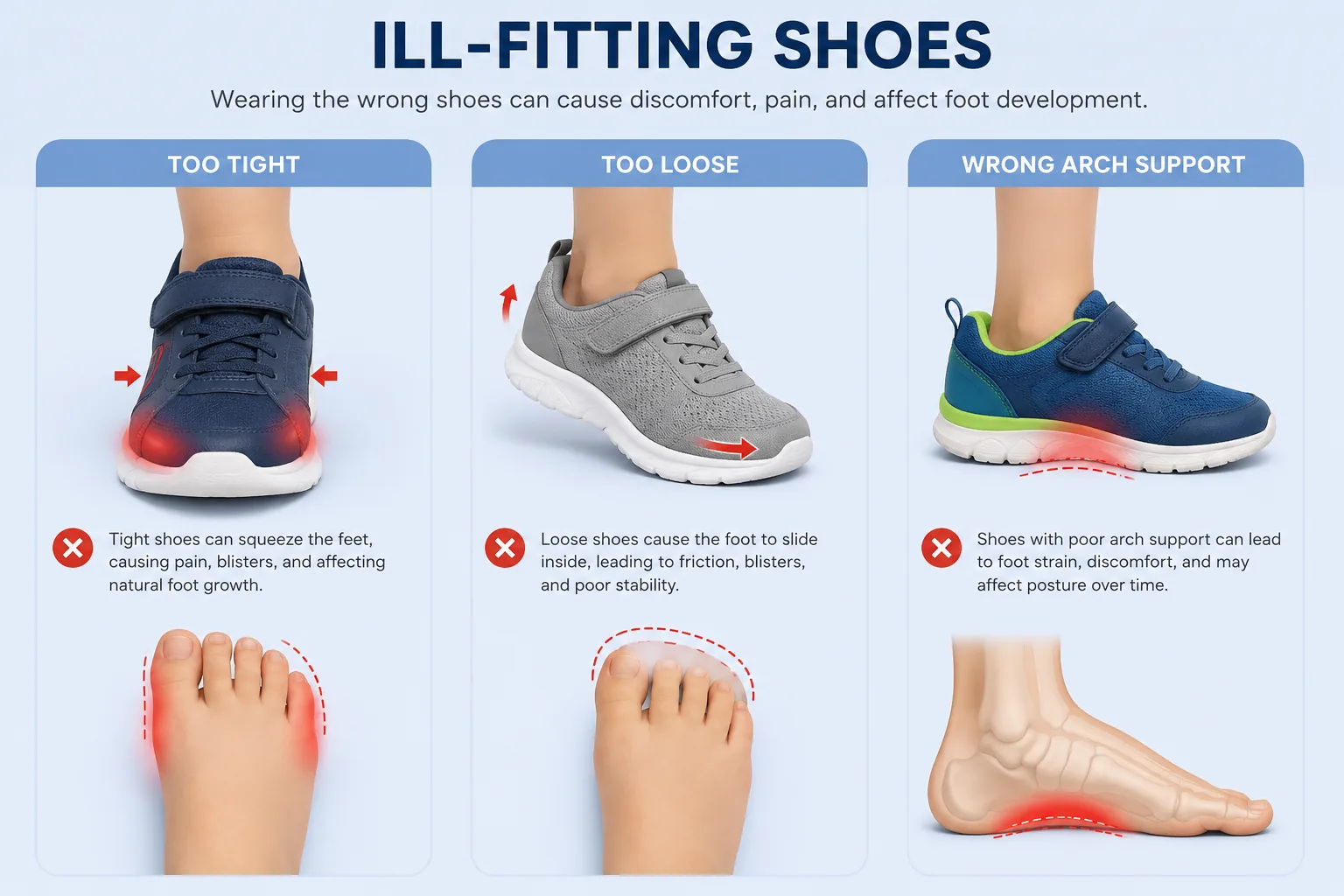
Three fit problems we see almost every week
Too tight, too loose, wrong arch support — each one leaves a different mark on the foot. Knowing which one you have changes what a custom insole needs to do.
How ill-fitting shoes show up at every age
Shoes that don't match your feet leave marks. Tap a tab to see what to look for in your child's shoes or your own.
Signs your child is in the wrong shoes
- Red marks on the heel, ankle bone, or top of the foot when they take shoes off.
- Blisters in the same spot more than once.
- Child wants to remove shoes constantly, even when it is impractical.
- Shoes that look 'still new' but child says they hurt.
- Toes pressed against the front of the shoe (check by pressing your thumb at the toe end with their foot inside).
- Heel sliding up and down inside the shoe when they walk.
Why kid shoe fit is critical
Children outgrow shoes faster than parents notice — feet can change a full size every 4 to 6 months during growth spurts. Shoes that fit two months ago may already be too small.
Tight shoes during growth can quietly affect arch development, toe alignment, and gait. The damage is rarely dramatic but can be long-lasting.
How we approach it for kids
We check current shoes against the foot scan and recommend size, shape, and shoe type that fits the child's specific foot.
A custom insole is also designed to maximise the workable life of well-fitting shoes between growth spurts, by adjusting for arch shape and pressure points.
More about our kids programmeSigns your shoes do not fit
- Persistent blisters, calluses, or corns in the same spots.
- Big toe joint pain after wearing certain shoes (often points to a developing bunion).
- Cramped toes, especially in narrow dress or sport shoes.
- Heel slipping out of the shoe while walking.
- Burning or numbness in the ball of the foot during the day.
- Lower back, hip, or knee pain that flares with specific shoes.
Why shoe fit matters more than brand
Shoes are sized by length, but feet vary in width, arch height, instep, and toe shape. A shoe that is the right length but wrong shape forces the foot to compensate.
Most adults wear shoes a half-size too small or a full width too narrow. The cost is cumulative: years of pressure shape long-term foot problems.
How we approach it for adults
Bring your most-worn shoes to the assessment. We compare the inside of the shoe to your 3D foot scan and identify mismatch points.
A custom insole fills the gap between a generic shoe and your specific foot — supports the arch where yours actually sits, cushions where you actually load.
See how an assessment worksThree common shoe-fit scenarios
-
Shoe shape matters
Most off-the-shelf shoes are built around one generic foot. Yours is probably wider, narrower, or arched differently. A custom insole fills the gap.
-
New shoe already hurt?
It is not "break-in time" — that is the shoe telling you it does not match your foot. Before returning, try a custom insole. Many problems disappear.
-
Kid shoes outgrow fast
Children outgrow shoes every 3 to 6 months. Custom insoles transfer between pairs, so each new shoe still fits the same foot correctly.
What people ask about shoe fit
Can custom insoles fix any shoe?
Most enclosed shoes with removable original insoles work — school shoes, sneakers, work shoes, dress shoes. Very narrow shoes, high heels, and open sandals are harder. We check shoe compatibility during the assessment.
What signs of an ill-fitting shoe should I look for?
Five common signs: blisters in the same spot every time, uneven heel wear, toes that bunch up or hit the front, the shoe feels tight at one part but loose elsewhere, foot pain that goes away with a different shoe.
Should I buy expensive shoes if I have insoles?
No need. A well-built shoe under RM200 with a removable insole works fine for most people. The insole inside does the structural work. Save your money for the insole, not the shoe brand.
Keep exploring
-
Forefoot Issues
Bunions, hammer toes, ball-of-foot pain — narrow shoes are a leading aggravator.
See forefoot issues -
Children Feet Issues
Kids grow fast. Shoes that fit last month may now cause real problems.
See kid issues -
Book an assessment
Bring your problematic shoes. We will check the fit and explain what we see.
See services
Bring your shoes — we will check the fit
20 to 30 minutes. In-store at Kepong or Johor Bahru. WhatsApp to book.