

Your 8-year-old wakes up with leg pain. Or asks to be carried halfway through a mall walk. Or rubs their knee every evening after school. You ask around, and half the parents shrug: “It’s just growing pains. They’ll outgrow it.”
Sometimes that’s true. But not always. And the gap between “harmless growing pains” and “something worth checking” is where a lot of treatable conditions go quietly untreated for years.
Here is how we help Malaysian parents tell the difference, in plain language.
What “growing pains” actually are
Growing pains are real. The medical community has a specific picture of them:
- Ache in the muscles, not the joints. Usually felt in the front of the thighs, calves, or behind the knees. Not on the kneecap or inside the joint.
- Happen at night or in the evening. Often during sleep, sometimes waking the child.
- Gone by morning. The child walks, runs, and plays normally the next day.
- Both legs, usually. Rarely one-sided.
- No swelling, no limp, no visible bump. The leg looks and moves normally when the pain passes.
About one in three children between ages 3 and 12 experience growing pains. In most cases, they do not signal anything serious and resolve on their own as growth stabilises.
Four signs it is probably not growing pains
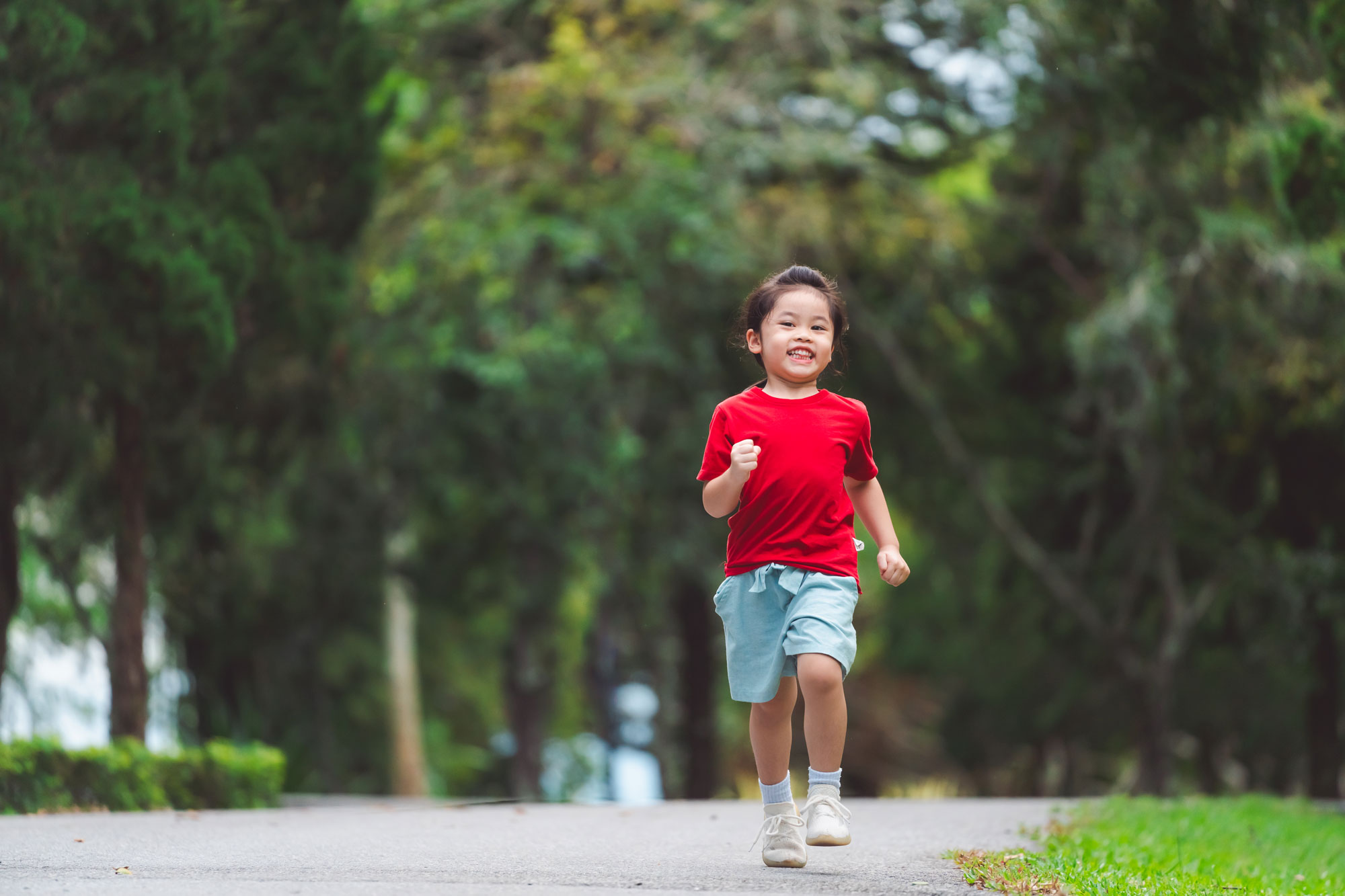
Real growing pains pass by sunrise. These signs usually do not.
1. The pain happens during the day, not just at night.
Pain during sport, PE, or walking that eases with rest and returns with activity is a different pattern. That is often mechanical. It points to how the foot or knee is loading.
2. There is a visible bump or tenderness you can feel.
Gently press just below the kneecap. If there is a tender, bony bump there that was not there a year ago, that is the classic sign of Osgood-Schlatter disease. It is a real condition, common in active kids 9 to 14, and it responds to support.
3. Your child limps for more than a few days.
A short limp after a hard day of football is normal. A limp that persists across days, or favouring one leg consistently, is not.
4. Only one leg is affected.
Growing pains are almost always symmetrical. Pain on one side only, especially if it is persistent, deserves a proper look.
Why foot alignment matters for knee pain
Here is the part many parents miss: knee pain in kids often traces back to the foot, not the knee.
When the arch collapses (flat feet), the lower leg rotates slightly inward. That rotation changes how the kneecap tracks through its groove with every step. A child takes around 10,000 steps a day. Small misalignment multiplied by thousands of steps becomes real irritation over weeks and months.
This is why we always watch the foot and the gait, not just the knee, when a child comes in with knee pain. Sometimes the kneecap is fine. The foot underneath is what needs support.
The 4 to 12 window, and why it matters
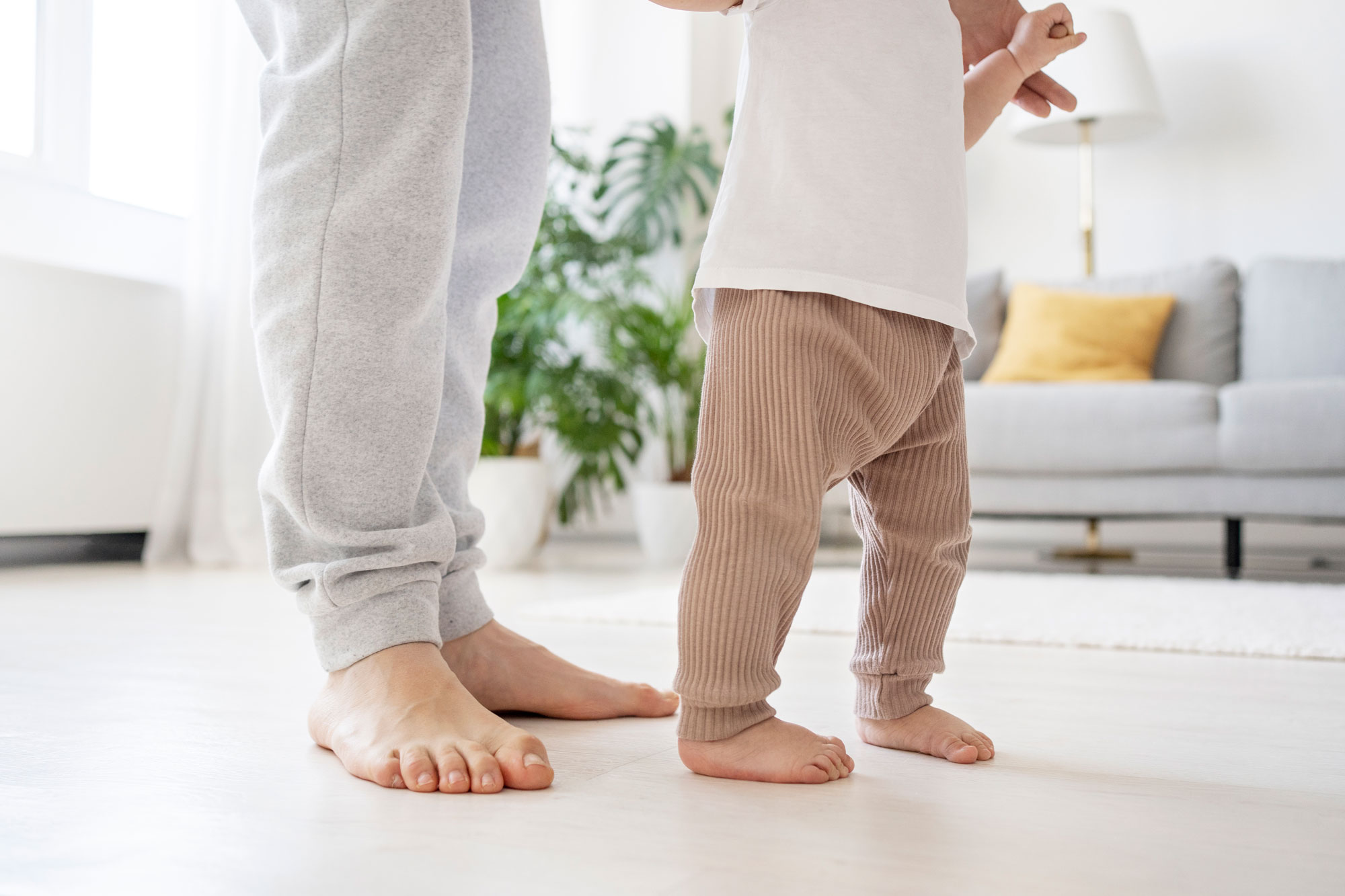
Between ages 4 and 12, a child’s foot arches, bones, and walking pattern are still forming. Mild gait issues often resolve on their own. Persistent ones, or ones that already cause pain, benefit from early support while the foot is still flexible.
Catching a misalignment during this window gives the best chance of a lasting improvement. Waiting until adulthood is harder. The bones have settled by then. The walking habit is set.
This does not mean every child needs insoles. It means that if your child already shows signs something is off, the window for the gentlest response is open right now.
What an assessment actually looks like
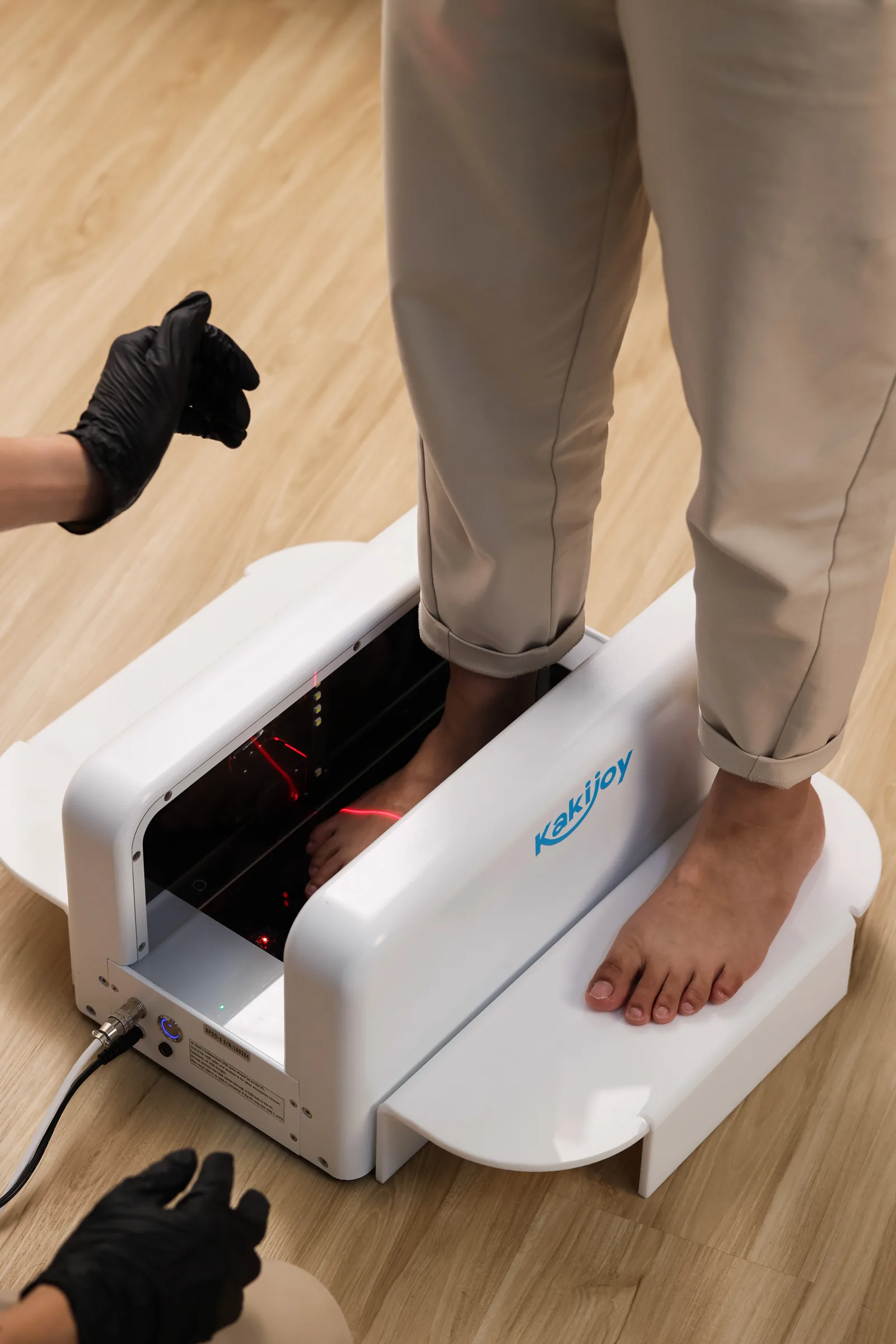
A KakiJoy foot assessment for a child takes 20 to 30 minutes and is completely painless:
- A 3D scan of both feet (the child just stands on a small pad for a few seconds).
- A short walking observation while we watch how the leg moves.
- A gentle review of knee, hip, and posture.
- A conversation with parent and child about sport, shoes, and what hurts.
If the signs point to growing pains, we say so. You go home reassured with nothing to buy.
If we see a real mechanical cause, we talk through the options. Sometimes posture coaching is enough. Sometimes a custom insole helps. Sometimes we refer you to an orthopedic specialist. The goal is to give you an honest answer, not a sale.
Key takeaways
- Real growing pains are night-only, both legs, and gone by morning.
- Daytime pain during activity, a tender bump below the kneecap, a persistent limp, or one-sided pain suggests something other than growing pains.
- Foot alignment often drives knee pain in kids. The knee is not always where the problem lives.
- The 4 to 12 window matters, because feet are still forming and respond best to gentle support.
- A 20 to 30 minute assessment is enough to tell you which group your child falls into.
Frequently asked questions
My 6-year-old has leg pain at night. Should I worry?
Probably not, if it is only at night, both legs, and they walk normally in the morning. Track it for a week or two. If it stays confined to evenings with no daytime impact, it is likely benign growing pains.
At what age should I book a foot assessment?
From age 3 onwards. The 4 to 12 window is when foot support makes the biggest difference, but we also assess younger children if parents have specific concerns.
My child has flat feet. Will this cause knee pain later?
Not automatically. Many people with flat feet never develop knee pain. But when knee pain does appear in a child with flat feet, the arch is usually part of the picture. An assessment tells you whether support now is a sensible preventive step.
Is there a point where it is too late?
Not really. Adults with lifelong flat feet or gait issues also benefit from support, though the response takes longer. The earlier, the better, but support at any age is still worth doing if it is causing real problems.