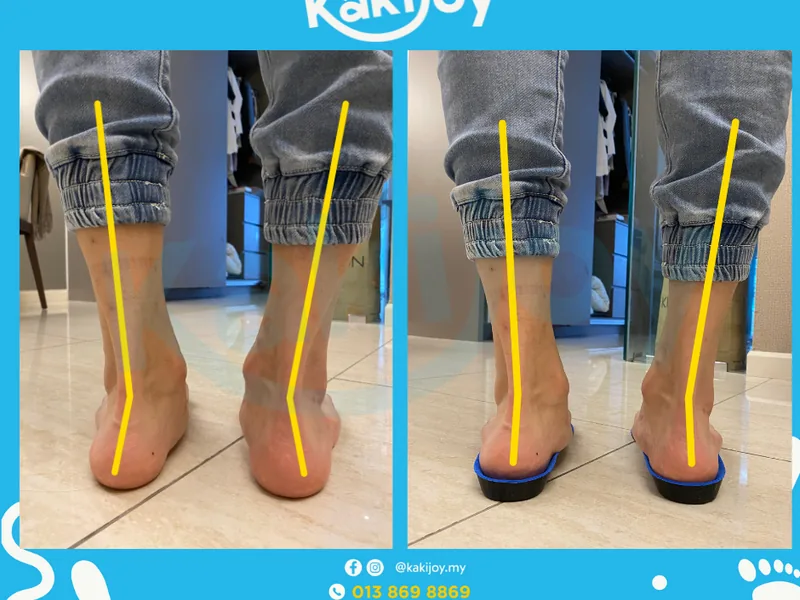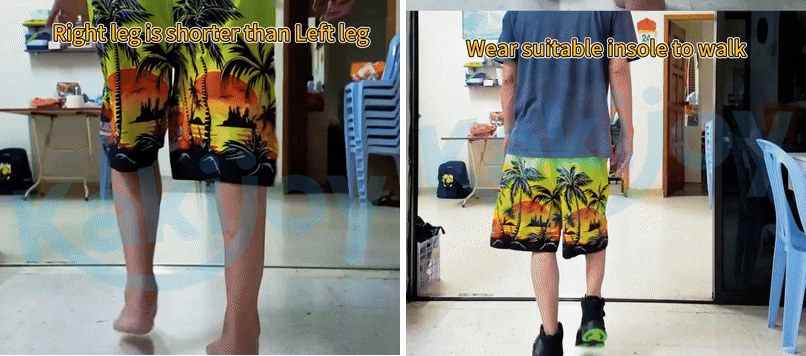
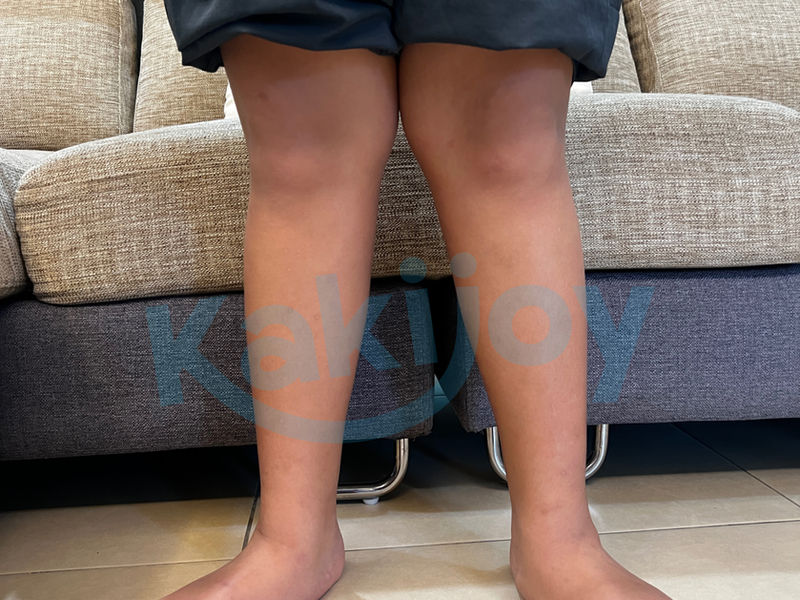
Most Malaysian parents we meet expected their child’s “duck walk” to sort itself out by primary school. For about 9 out of 10 kids, it does. For the rest, the pattern quietly settles in and starts to show up as something else. A sore knee. Trips during PE. One shoe wearing differently from the other.
This is the story of one of those kids. Names changed. Everything else is exactly how it went.
The first visit
A mother brought her 12-year-old son in after his PE teacher flagged it during a running assessment. His feet turned out noticeably when he walked, and more when he ran. He was a keen futsal player, but he had started avoiding the sport. His knees ached after games. He was tripping over his own feet when he sprinted.
At home, his mother had noticed three things:
- The outer edges of both his school shoes were crushed down, while the inner edges looked almost new.
- He sat in a reverse-W shape on the floor, feet tucked behind him, knees facing forward.
- His right leg turned out more than his left when he stood relaxed.
He was not in constant pain. But something was clearly off.
What out-toeing actually is
Out-toeing is when one or both feet angle outward instead of pointing straight when a child walks. Some out-toeing is normal in toddlers whose hip joints are still loosening. By age 8, most children settle into a near-straight walking pattern.
When it persists past 8, we usually look at three places:
- The thigh bone. It can be rotated slightly backward (femoral retroversion), turning the whole leg outward.
- The shin bone. It can have a mild outward twist (external tibial torsion).
- The foot. A flat or rolling-in arch can force the foot to point outward as a compensation.
Most cases are painless and do not need treatment. But when a child already complains of pain, or the pattern is clearly affecting sport or walking, an assessment is worth doing.
The assessment, step by step
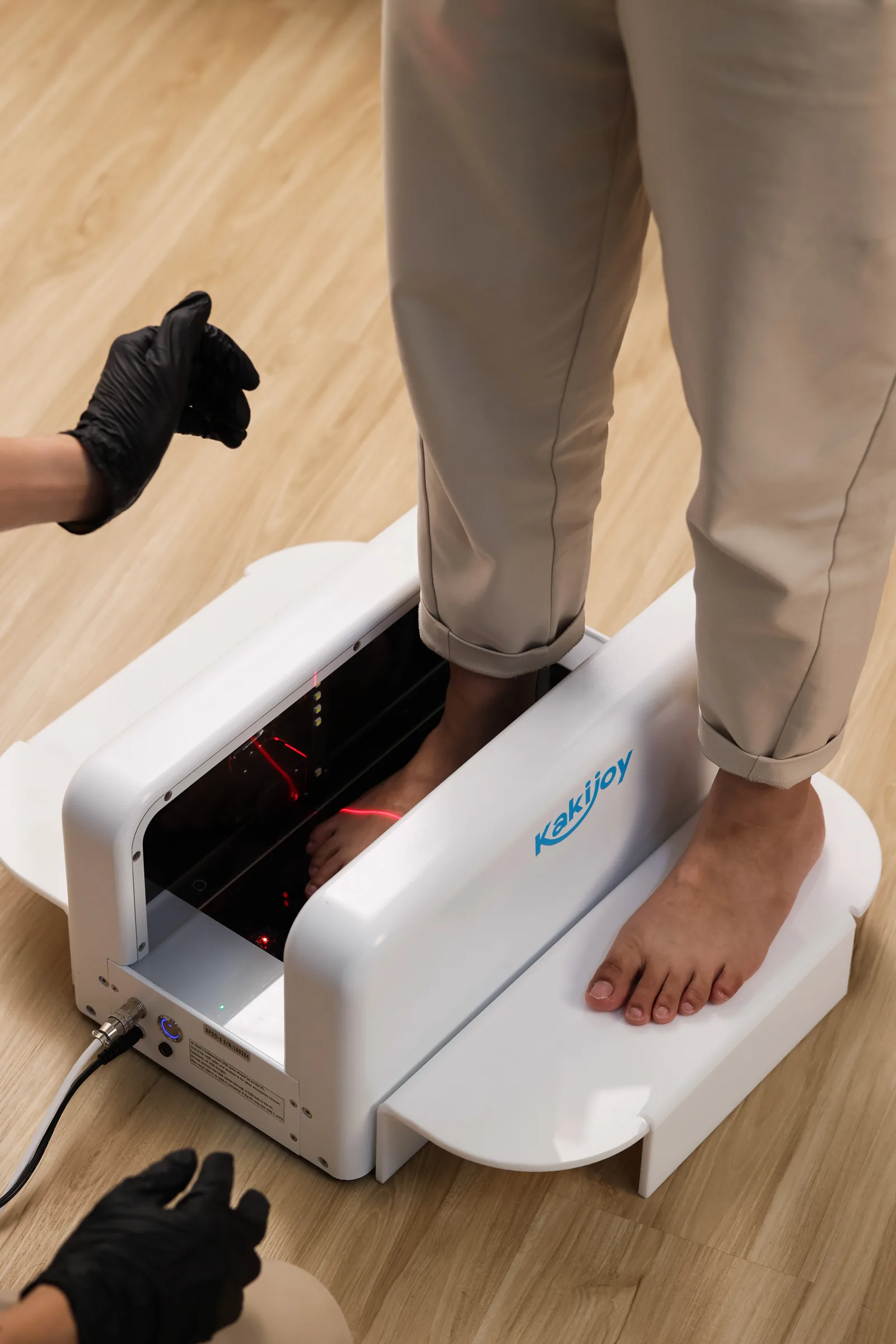
Over about 40 minutes we did the following:
- 3D foot scan. Both feet showed a low arch, particularly on the right.
- Walking and running observation. The out-toeing was mild at walking pace, noticeable when jogging, and pronounced when sprinting.
- Rotation profile check. Gentle hip rotation tests showed slightly more external rotation in the right hip than the left. This fit a mild femoral pattern.
- Knee and ankle screen. His knees tracked slightly inward during squats, a common finding when the foot rolls in.
- Shoe wear review. Confirmed what his mother had seen at home.
We did not x-ray or make any structural diagnosis. Our job is to observe and to decide whether support and strengthening are reasonable, not to replace an orthopedic specialist.
What we told the family
Three things.
1. This is not an emergency. No pain at rest, no single-side limp, no stiffness in the joints. His mother had been carrying quiet worry for two years that “something was wrong with him.” That worry was reasonable, but the picture was manageable.
2. The foot is where we can help most. Thigh and shin rotation are structural. They do not change with insoles. But his right foot was clearly rolling inward, and that was adding to the turnout during running. Supporting the arch would reduce the foot-driven part of the pattern.
3. Strengthening the hips matters as much as the insole. The kneecap tracking inward during squats pointed to weak hip muscles. We shared simple clamshell and single-leg balance exercises his mother could supervise at home.
The plan
- Custom insole for his school shoes and futsal boots, built from his 3D scan, focused on right-arch support.
- Hip strengthening for 10 minutes a day, 4 days a week.
- Futsal modification. Continue playing, but reduce from 5 sessions a week to 3 until knee ache resolved.
- Review visit at 8 weeks.
We did not promise the out-toeing would fully disappear. We told the family honestly that the thigh and shin contributions were probably permanent. What we could influence was the foot loading and the knee stability.
What happened
At the 8-week review:
- Knee ache during futsal had stopped.
- Tripping during sprinting had reduced, not disappeared.
- His mother reported his shoes were wearing more evenly, not yet perfectly.
At 6 months:
- He was back to 5 futsal sessions a week, pain-free.
- His PE teacher said his running looked more balanced.
- The outward angle was still visible when he stood relaxed, but was much less obvious during sport.
This is a typical outcome for a mixed case like his. The rotation we cannot change is still there. The foot and knee loading, which was the actual source of his pain, is now well-managed.
Key takeaways
- Most childhood out-toeing resolves on its own by age 8. When it persists and causes pain, trips, or uneven shoe wear, it is worth a proper look.
- Three different bones can contribute. Thigh rotation and shin twist are usually permanent. Foot mechanics can be supported.
- The goal is not to make the walk look “straight”. The goal is to remove the pain, reduce the trips, and protect the knees.
- Hip strengthening matters. Insoles alone do half the job. The other half is the muscle that controls the hip.
Frequently asked questions
My child is 5 and still duck-walks. Should I rush to an assessment?
Probably not yet. Most toddlers outgrow this by 8. If there is no pain, no limp, and no visible stiffness, tracking the pattern is usually enough. Book an assessment if it persists past 8, or if there is pain at any age.
Can you fix out-toeing completely?
Not always. If the cause is bone rotation in the thigh or shin, that part does not change. What we can usually fix is the pain and the foot contribution.
Is W-sitting bad for my child?
W-sitting is a signal, not a disaster. Kids with naturally outward-rotated hips find W-sitting the most comfortable position. It is worth offering alternatives (cross-legged, side-sit) but not worth fighting over every time.
How soon will we see changes?
Pain usually settles within 4 to 8 weeks if the plan is followed. Visible gait changes take longer, around 3 to 6 months. Some changes never happen if the cause is bone shape, and that is fine. The priority is a pain-free, active child.